Mostrar mensagens com a etiqueta sketches. Mostrar todas as mensagens

sexta-feira, 20 de março de 2015

Hampi


Monkeys on the climb to Matanga Hill

 Details of Hampi

The wonderful view from Matang Hill. The picturesque sight from the top comprises the Tungabhadra River, the Kodanda Rama temple, the Veerbhadra temple and the Turthu canal.
Stone chariot in the Vithala Temple Complex
Worker keeping the floor clean of weeds
Vithala Temple Complex
Stepped tank
Lotus Temple
José sketching at Elephant Stables
          
Steps of the Mahanavami Dibba pyramid
Streets of Hampi

Making offerings to the gods. Being grateful for the water.
Sunset at Hemakuta Hill
Elephant Stables
View to  Virupaksha Temple
Woman in a small village near Hampi
Boy selling postcards and guides that stopped to talk with us 
Chegámos a Hampi às 7h30 da manhã, depois de 8h30 no sleeper bus que nos surpreendeu pela positiva! De um lado do autocarro tem camas de casal e do outro camas individuais, todas com portas de correr para se ter alguma privacidade e descanso. Este autocarro tinha inclusive fichas de electricidade e a nível de higiene não estava tão mau como poderíamos espectar! 
A esta altura da viagem, reflectimos sobre o nosso percurso na Índia, mas ainda não conseguimos perceber se gostamos dela ou não. Há muito que aprender e ver ainda para se reflectir sobre este ambiente em que a Índia nos envolve, as suas pessoas e todos os estrangeiros que a procuram por diversos motivos, desde a espiritualidade, até aprendizagem, interiorizações, buscas pessoais, novos começos...há de tudo. Conhecemos pessoas que vieram à Índia por um curto período e acabaram por voltar para aprofundar o seu yoga ou simplesmente para ficarem mais tempo num local que gostaram. Outras deixaram tudo para trás, foram viver para um ashram, sem dinheiro ou posses e algumas enfrentam dificuldades para sair agora dessa opção.
Mas Hampi pareceu-nos um local onde se pode ficar por meses, sendo, no entanto, uma pequena aldeia de terra batida e poucas infra-estruturas. Foi por isso fácil deitar cedo e acordar com o Sol para percorrer as ruas estreitas mas cheias de lojas de artesanato e vestuário, ou tomar o pequeno-almoço num dos agradáveis terraços com almofadas e mesas no chão para ficarmos a relaxar ao ritmo suave de Hampi.
Ali senti-me a aprender a ouvir ainda melhor o meu corpo, a criar um ritmo que gostaria de ter e que sei ser difícil em países com distracções nocturnas ou no nosso, com amigos para encontrar ao fim do dia e fins-de-semana, internet e tv. 
Mas passar por estas experiências também nos faz querermos mudar algumas coisas no nosso ritmo e fazer alterações ao nosso estilo de vida, sabendo do que é necessário prescindir para estarmos melhor.
Descobrimos Hampi porque alguém com quem falámos nos recomendou e, apesar do desvio, valeu a pena! É um dos locais Património da Humanidade da UNESCO e fica localizada no estado de Karnataka. 
Entre os seus montes e vales, o que caracteriza o local são os seus mais de 500 monumentos e ruínas a visitar de bicicleta ou tuk-tuk. Os mais próximos da vila visitam-se a pé, passando por rebanhos de ovelhas e cabras e macacos brincalhões (que estão por todo o lado). Há bastantes locais com maravilhosas vistas para as ruínas e de onde se observa o pôr e o nascer do Sol.
Foi um encanto para nós percorrer aquelas ruínas, observar tudo com atenção e subir a lugares altos para ver as vistas. Sentia-se o sossego e podíamos ficar horas sentados a contemplar...
Como todos os locais na índia, Hampi também é feita das pessoas que lá vivem. Algumas podem ser um pouco intrometidas porque querem vender algo (ou na sua loja ou uma tour de tuk-tuk ou bicicleta, ou até mesmo crianças cheias de lábia que vendem postais e guias), mas outras não têm qualquer interesse senão estar um pouco connosco a conversar ou partilhar um momento, e é dessas que melhor recordamos...
Hampi fica na memória pelo seu estilo de vida tranquilo e ritmo diário sereno. Cheia de cantos que nunca conheceremos, infindáveis detalhes nas suas imensas ruínas de palácios, mercados, pavilhões e palácios reais, monumentos, estátuas... e incontáveis pores-do-Sol.

//

We arrived in Hampi at 7:30 am, after 8:30 on the sleeper bus that surprised us positively! On one side of the bus it has double beds and on the other side, single beds, all with sliding doors to have some privacy and allow us to rest. This bus had electricity and hygiene level was not as bad as we could expect!
At this point of the trip, we reflected on our journey in India, but we still have to decide if we like it or not. There is still much to learn and see so we could think about this environment that surrounds us, its people and all foreigners who come to India for various reasons, from spirituality, to learning, personal searches, new beginnings... We can find all the reasons! We know people who came to India for just a short period and eventually they returned to deepen their yoga or just to spend more time in a place they loved. Other left everything behind, went to live in an ashram, without money or possessions and some are now struggling to get out of that option.
But Hampi seemed to us a place where we could stay for months even if it's a small village of dirty roads and almost no infrastructures. 
It was so easy to go to bed early and wake up with the Sun to go through the narrow streets full of craft shops and clothing stores, or to take breakfast in one of the nice terraces with tables and cushions on the floor. Just relaxing in the smooth rhythm of Hampi .
There I felt learning to hear even better my body, creating a rhythm that I would like to have and which I know is difficult in countries with night distractions or in our own country, where our friends live and meet us in the evenings and weekends, or where we have internet and tv.
But go through these experiences also makes us wanting to change some things at our pace and make changes to our lifestyle, knowing what is necessary to leave behind for being better.
We found Hampi because someone we spoke to recommended it to us and despite the deviation on the way, it was worth it! It is one of the UNESCO heritage sites of the World and is located in the state of Karnataka.
Among its hills and valleys, what characterizes the place are its more than 500 monuments and ruins to visit by bike or tuk-tuk. The nearest to the village can be visited on foot, passing flocks of sheeps and goats and playful monkeys (which are everywhere). There are plenty of places with wonderful views of the ruins and where we can see the sunset and the sunrise.
It was a charm for us navigate those ruins, observe everything carefully and climb to high places to see the sights. We could feel the quietness and spend hours seated just contemplating...
Like all places in India, Hampi is also made of the people who live there. Some may be a bit nosy because they want to sell something (or in their store or some tuk-tuk or bicycle tour, or even children selling postcards and guides), but others have no interest but be a little with us to talk or share a moment, and it is these people that we better remember...

Hampi stays in memory for its peaceful lifestyle and serene daily rhythm. Full of corners that we will never know, endless details in its immense ruins of palaces, markets, pavilions, royal palaces, monuments and statues...and countless sunsets.

domingo, 7 de dezembro de 2014

Munnar, terra do verde, do chá e das sanguessugas // Munnar, land of green, tea and leeches

Street market
Munnar center
Catholic church, Munnar. Shoes outside.
Tea plantations
Tea plantations

23.10 – Ao chegarmos tomámos um delicioso duche quente, (daqueles que enchem o WC de vapor de água) e tive noção que já não tomava um duche quente há bastantes semanas. Desde Colombo, no Sri Lanka, se não estou em erro! As temperaturas altas e a falta de aquecimento na maioria dos hóteis por onde passámos têm feito com que a água fria se tenha tornado uma presença constante, sem que isso tenha, necessariamente, sido uma má coisa. Mas aqui em Munnar as temperaturas são mais baixas e a água da torneira é demasiado fria para ser apetecível.
No dia seguinte fizémos um trekking pelas plantações de chá, a principal fonte de rendimento e de trabalho da cidade. É uma paisagem impressionante!
Disseram-nos que por vezes se conseguem avistar elefantes mas nós só avistámos as suas fezes em locais que pensávamos serem de acesso impossível para um animal daquele porte.
Em vez disso, tivémos a presença de sanguessugas nos sapatos! Bem, nunca tínhamos visto nenhuma e pensava-as maiores e mais gordas. Algumas conseguem ser bem pequenas e quase não darmos por elas e, por isso, depois de passarmos as pernas por vegetação alta, fazíamos uma pausa para ver se alguma tentava agarrar-se à bota ou que pudesse ter mesmo entrado para o sapato ou para as calças.
Estava um dia chuvoso, o que não nos deu uma boa visualização do alto dos montes a mais de 2000 m de altitude a que subimos (Munnar é uma terra localizada a elevada altitude, por isso os montes não são altos como a Serra da Estrela, mas estão facilmente a uma altitude mais elevada que esta). Mas essa mesma neblina permitiu umas fantásticas fotos de uma paisagem que já por si era magnifíca. “Degraus” de plantações pelas colinas fazem uma decoração natural perfeita para aquele local tão visitado por turistas indianos pelo verde que eles tanto adoram.
Nessa noite dormimos bem mas só depois dos festejos do Diwali terminarem. O chamado “Festival das luzes” é das maiores comemorações Hindus na Índia, na qual eles acendem velas e candeeiros nas ruas, templos e casas e vêem-se vários fogos de artíficio pelas cidades. Em Munnar parecia Carnaval, com miúdos e adultos a divertirem-se com estalinhos e morteiros.
Os dias ali passados foram de descanso. O centro da cidade é pequeno, com vários mercados de rua e lojas de chocolate. Três templos principais nas três colinas da cidade (Católico, Hindu e Budista) constituem os principais pólos de movimento dos locais. Num dos nossos almoços conhecemos um casal de italianos que trabalham em Mumbai e estavam de férias. Trocámos impressões do país e ouvimos recomendações de comida e sítios a visitar.
Tempo de apanhar o autocarro de longa distância para Bangalore, onde depois veremos como podemos conseguir chegar a Hampi, o nosso próximo destino!

//

23:10 - When we arrived we took a delicious hot shower, (those ones that fill the bathroom with steam) and I realized we didn't have one in weeks. Since Colombo, Sri Lanka, if I am not mistaken! The high temperatures and the lack of heaters in most hotels where we stayed have made the cold water a constant presence, without this having necessarily been a bad thing. But here in Munnar temperatures are lower and the tap water is too cold to be delicious.
The next day we made a trek through the tea plantations, the main source of income and labour. It is an impressive landscape!
We were told that sometimes elephants can be seen but we only saw their dung where we thought impossible to access for an animal that size.
Instead, we had the presence of leeches on the shoes! Well, we've never seen any and thought woulb be larger and fatter. Some can be very small and hardly noticeable, so, after passing through high vegetation, we made a break to see if any tried to cling to the boot or could have even entered the shoe or pants.
It was a rainy day, which did not give us a good view of the top of the mountains over 2000 m of altitude we go up (Munnar is a land located at high altitude, so the mountains are not as high as "Serra da Estrela", but are easily at a higher altitude). But that same fog allowed fantastic pictures of a landscape that in itself was magnificent. "Steps" of the hills plantations make a perfect natural decoration for that location so visited by Indian tourists for the green they love so much.
That night we slept well but only after the Diwali celebrations are over. The so-called "Festival of Lights" is the biggest Hindu celebration in India, when they light candles and lamps in the streets, temples and homes and several fireworks can be seen in the cities. It seemed like Carnival in Munnar, with kids and adults having fun with firecrackers.
The days spent there were of rest. The city center is small, with several street markets and chocolate shops. Three main temples in the three hills of the city (Catholic, Hindu and Buddhist) are the main locations of the motion poles. At one of our lunches we met an Italian couple who work in Mumbai and were on vacation. We exchanged impressions of the country and hear food recommendations and places of interest.
Time to catch the long distance bus to Bangalore, where then we'll see how we can reach Hampi, our next destination!

Susana

sexta-feira, 5 de dezembro de 2014

Onde a água doce encontra a salgada // Where freshwater meets sea water

Kerala's Backwaters
Backwaters island and boat
Backwaters local washing her cow

Chinese fishing nets
Santa Cruz Cathedral interior
Canoe's "driver"
Santa Cruz Cathedral, Fort Kochi
backwaters village house
Backwaters boat ride
22.10.2014 - Deixámos hoje Kochi onde nos últimos dias fomos ficando porque apanhei uma virose que me fez ter febre e diarreia. Pelo sim, pelo não, fui ao médico. Disseram-me para ir ao hospital público: confusão de gente em fila para ser atendida. Era sentar na cadeira ao pé do médico, contar as desgraças, trazer a receita e venha o próximo. Os medicamentos são dados (sim, dados) à quantidade e não à caixa. Mas não contente com o veredicto, procurámos uma clínica privada onde fui atendida com mais atenção. A conta final, com medicamentos incluídos, deu à volta de 6 euros.
Kochi não tem muito que ver: mesquitas, palácios holandeses e redes de pesca chinesas, alguns edifícios de influência portuguesa e igrejas católicas (a Catedral de Santa Cruz foi a mais curiosa que vi até hoje. Uma mistura de decoração ocidental com indiana deu numa igreja cheia e com néons à volta de Maria, no altar), .
Podem fazer-se tours organizadas às Backwaters: canais, rios e lagos interligados num sistema labiríntico criando um ecossistema único onde a água doce dos rios encontra a água salgada do Mar Arábico, (estas tours acabam por compensar pois não são caras) e vale a pena.
Deu para relaxar num tranquilo passeio de barco por entre ilhas e canais cheios de vida animal, aves principalmente, e flora tropical, e ainda conhecer uma rapariga sérvia que estava no final da sua viagem de 1 mês pela região de Kerala. Partilhou connosco algumas impressões e sugestões do Sul, o que foi uma boa ajuda para quem tinha praticamente acabado de chegar!
O nosso hotel, Mother Tree, fica em Fort Kochi, a zona tranquila da cidade onde se podem passar uns dias calmos, longe da confusão das cidades indianas. Junto a ele há um pequeno restaurante familiar chamado Taj Mahal onde comemos na maior parte dos dias pois era muito em conta em comparação com os preços que encontrámos na cidade. Comida boa e sentimo-nos sempre em casa, pois a esplanada era, literalmente, nas traseiras da casa da família!
Como já me sinto melhor, apanhámos o autocarro de Kochi para Munnar, mais para o interior do Sul da Índia. A viagem faz-se por entre pequenas povoações e solavancos num autocarro velho e sujo de janelas sempre abertas, pois não tem vidros. A certo ponto a paisagem muda, o ar refresca e começamos a subir em altitude. A estrada serpenteia pela floresta tropical densa, passamos macacos à beira da estrada, quedas de água tímidas e outras imponentes. Locais de beleza incrível que me surpreendem pela imensidão de vida, verde e de locais escondidos e sozinhos. Ao começarmos a descer a floresta abre, mais casas e vacas a pastar... o autocarro vai parando. Pessoas vão entrando e saindo. A viagem continua.

//

22/10/2014 - We left Kochi today where we kept staying in the last few days because I got a virus that made me have fever and diarrhea. In doubt, went to the doctor. I was told to go to the public hospital: A big mess of people queueing to be seen by the doctor. It was sitting in front of the doctor, tell the woes, take the prescription and repeat. The drugs are given (yes, free) in the exact quantity and not the full box of pills. But not happy with the verdict, I sought a private clinic where people were seen with more time and attention. The final bill, including medicines, was around 6 euros.
Kochi does not have much to do: mosques, Dutch palaces and Chinese fishing nets. some buildings of Portuguese influence and Catholic churches (the Cathedral of Santa Cruz was the most curious I saw today, a mixture of western and Indian decor that resulted in a full church with neons around Mary, on the altar), 
Tours can be organized to go to the Backwaters: canals, rivers and lakes interconnected in a labyrinthine system, creating a unique ecosystem where fresh river water meets the salt water of the Arabian Sea (these tours end up worthing and are not expensive).
It was good to relax in a tranquil boat ride through islands and channels filled with wildlife, birds mainly, and tropical flora, and still get to know a Serbian girl who was at the end of her one month trip by the Kerala region. She shared with us some impressions and suggestions for  the south, which was a good help for us, who had practically just arrived!
Our hotel, Mother Tree, located in Fort Kochi, the quiet part of town where you can spend a few quiet days, away from the hustle of Indian cities. Next to it there is a small family restaurant called Taj Mahal where we ate in most days, it was very affordable compared to the prices we found in the city. The food is really good and we feel always at home because the tables were literally in the backyard of the family home!
As I feel better, we took the bus from Kochi to Munnar, further inland of South India. The trip is done through small villages and bumps in an old and dirty bus, windows always open because it has no glass. At one point the landscape changes, the air cools and began to climb in altitude. The road winds through dense rainforest, we see some monkeys on the roadside, some shy waterfalls and others imposing. Incredible beauty spots that surprise me by the immensity of life, green and hidden and alone locations. As we begin to descend the forest opens, more houses and cows to graze... the bus will stop. People go in and out. The journey continues.


segunda-feira, 8 de setembro de 2014

ULAN-UDE (Last Russian stop)

Ivolginsky temple
Rinponche Bagsha datsan
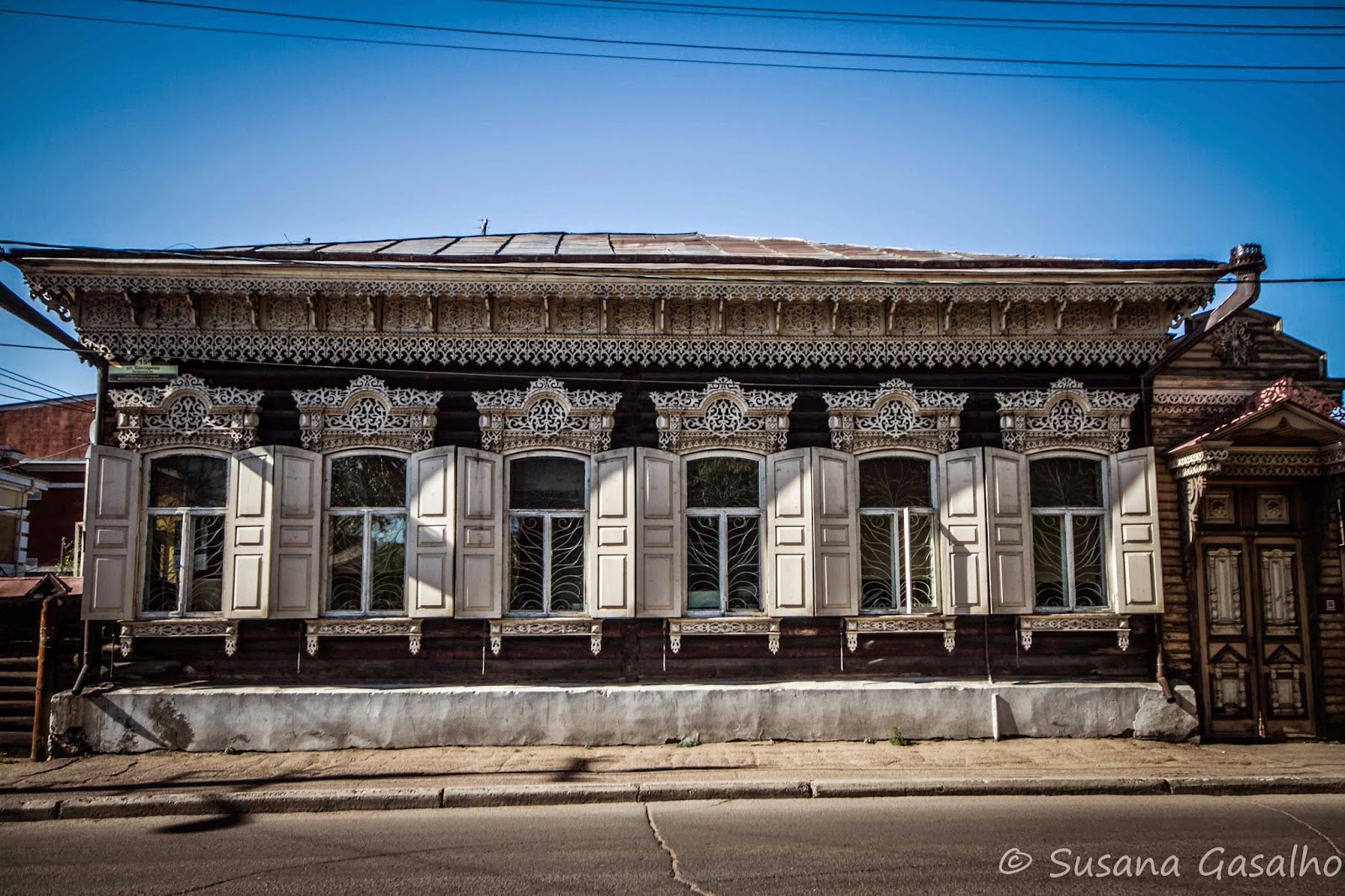
Wooden house
Detail of a wooden house
Ivolginsky Datsan
Wooden house
ULAN-UDE
Ulan-Ude (GMT+8). Vimos o Sol nascer e chegámos. Deixámos as coisas no hostel e procurámos o que ver na cidade, observámos o mapa e recolhemos a informação sobre que transportes apanhar para visitar o que queremos.
Para além de querermos ver a cidade, o nosso propósito era visitar um templo budista que está localizado a 2h da cidade. São precisos apanhar 2 mini-carrinhas e foi bastante fácil encontrá-las. Um dos mini-bus custou-nos 40 rublos (+/- 0,80 €) e o outro 20 rublos (+/- 0,40€) por pessoa e só ida. Para pagar só temos de entregar o dinheiro às pessoas à nossa frente e vai sendo passado até chegar ao motorista. O carro só parte quando cheio.
O templo, localizado a 23 Km de Ulan-Ude, chama-se Ivolginsky datsan. Fica perto da aldeia de Verkhnyaya Ivolga na região da Buryatia, na Rússia. Sente-se uma grande paz e sossego no espaço que é composto por vários pequenos templos. Senti-me um pouco como no filme “7 anos no Tibete” pois os monges são naturalmente sorridentes e simpáticos. Divertem-se com pequenas coisas. Vi um bastante jovem (uns 17 anos) a brincar com um cão e gato. Quando o gato correu arreliado atrás do cão, o monge riu-se imenso divertido, o que me fez rir também.
Na história deste datsan consta que em 1927 o 12º Pandito Hambo Lama, Dashi-Dorzho Itigelov pediu aos seus estudantes e monges companheiros que enterrassem o seu corpo depois da sua morte e que só o voltassem a verificar após 30 anos. Segundo a história, Itigelov sentou-se então na posição de lótus, começou a cantar a “oração da morte” e morreu a meio da meditação. Os monges seguiram todas as suas indicações mas quando exumaram o seu corpo passados 30 anos, ficaram espantados por descobrir que não tinha sinais de decomposição. Pelo contrário, parecia que Itigilov tinha morrido apenas a algumas horas atrás. Com medo da resposta Soviética ao sucedido, os monges enterraram novamente o corpo numa campa anónima.
A história de Itigelov foi esquecida até dia 11 de Setembro de 2002, quando o corpo foi finalmente exumado e transferido para o Ivolginsky datsan onde foi examinado por monges, cientistas e patologistas. A declaração oficial diz que o corpo está muito bem preservado, sem sinais de decomposição, ainda com os tecidos dos músculos e pele. O corpo nunca foi embalsamado ou mumificado. Impressionante!
Já de volta a Ulan-Ude, capital da República de Buryatia, região localizada na parte sul da Sibéria e que é parte da Rússia desde 1920. (By the way, na Sibéria é normal conduzir-se com o volante de ambos os lados embora as estradas estejam preparadas para a condução com o volante à esquerda). Visitámos o Rinponche Bagsha datsan, localizado num ponto panorâmico onde se pode ter uma bela vista para a cidade. É um famoso centro budista rodeado de natureza e com a maior estátua do Buda da Rússia. Mede 5 metros e é feita de madeira do Brasil. É fácil e barato de chegar lá com o mini-bus nº 97 que parte da praça principal.
É um local muito pacífico com boa energia. Uma senhora que lá trabalha chamou-nos para visitarmos um dos templos e tentou explicar-nos (em chinês) os diferentes Budas presentes. Dedicou algum tempo a mostrar-nos o espaço e a fazer-nos sentir a energia das estátuas e depois a energia do Sol. Foi um bom momento!
Ao final do dia tivemos a nossa primeira experiência com uma russa mal disposta. Talvez tenha sido um mal entendido porque nunca chegámos a perceber qual era o problema, mas falou-nos de uma forma zangada enquanto o seu companheiro encolhia os ombros e olhava para nós. Regra geral, fomos sempre bem tratados pelos russos. Alguns abordavam-nos na rua e cumprimentavam-nos simpaticamente.
No hostel (que fica localizado no centro, junto à enorme e famosa cabeça gigante do Lenine) conhecemos outro casal francês que faz o percurso na direcção oposta. Começaram em Myanmar e saltaram alguns países pois o dinheiro já apertava mas foram, por exemplo, à Coreia do Norte onde gastaram 950€ em 5 dias com uma tour organizada pois não há outra maneira de lá ir. Perdemos algum tempo a falar sobre as suas impressões do país, do quão organizado e artificialmente preparado para turistas está.

//

Ulan-Ude (GMT +8). We saw the sun rise and arrived. We left our stuff in the hostel and searched what to see in town, we observed the map and collect information about which transports can take us where we want to visit.
In addition to wanting to see the city, our purpose was to visit a Buddhist temple, which is located 2 hours from the city. It takes 2 mini-vans and it was quite easy to find them. One of the mini-buses cost us 40 rubles (+ / - 0,80 €) and another 20 rubles (+ / - 0,40 €) per person one-way. To pay we just have to give the money to the people ahead of us and will be passed to reach the driver. The car only leaves when full.
The temple, located 23 Km from Ulan-Ude, called Ivolginsky datsan. It is near the village of Verkhnyaya Ivolga the region of Buryatia, Russia. Feels great peace and quiet in this place that consists of several small temples. I felt a bit like the movie "7 years in Tibet" because the monks are naturally smiling and friendly. Amuse themselves with little things. I saw a very young (about 17 years) playing with a dog and a cat. When teased the cat ran after the dog, the monk laughed amused, which made me laugh too.
In the history of this datsan states that in 1927 the 12th Pandito Hambo Lama Dashi-Dorzho Itigelov asked his students and fellow monks to bury his body after his death and that return to check after 30 years. According to history, Itigelov then sat in the lotus position, started to sing the "Prayer of Death" and died in the middle of meditation. The monks followed his wishes and when his body was exhumed 30 years later, they were astonished to discover that he had no signs of decomposition. Rather, it seemed that Itigilov had died just a few hours ago. Afraid of the Soviet response to the succeeded, the monks buried the body in an unmarked grave again.
The story of Itigelov was forgotten until 11 September 2002 when the body was finally exhumed and transferred to the Ivolginsky datsan where it was examined by monks, scientists and pathologists. The official statement says that the body is very well preserved, with no signs of decomposition, even with the tissues of muscles and skin. The body was never embalmed or mummified. Impressive!
Now back to Ulan-Ude, capital of the Republic of Buryatia, a region located in southern Siberia and that is part of Russia since 1920. (By the way, in Siberia is normal to drive with the steering wheel on both sides though roads are prepared for driving with the steering wheel on the left). Visited the Rinponche Bagsha datsan, located in a scenic spot where you can have a beautiful view of the city. It is a famous Buddhist center surrounded by nature and with the largest Buddha statue in Russia. Measures 5 meters and is made of wood from Brazil. It's easy and cheap to get there with the mini-bus # 97 that departs from the main square.
It is a very peaceful place with good energy. A lady who works there called us to visit one of the temples and tried to explain to us (in Chinese) the different Buddha images there. Took some time to show us the space and making us feel the energy of the statues and then the energy of the sun. It was a good moment!
At the end of the day we had our first experience with an angry Russian. Maybe it was a misunderstanding because we never realized what the problem was, but she spoke to us in an angry manner while his companion shrugged and looked at us. Generally, we were always treated well by the Russians. Some approached us on the street and greeted us kindly.
In the hostel (which is located downtown, next to the huge and famous giant head of Lenin) met another French couple who make the journey in the opposite direction. They started in Myanmar and then skipped some countries because the money was already tight and went to North Korea where they spent € 950 in 5 days with an organized tour because there is no other way to go there. We spent some time talking about their impressions of the country, of how artificially organized and prepared for tourists it is.

quarta-feira, 27 de agosto de 2014

IRKUTSK - ULAN-UDE 456 KM (from 29.05 - 22:10 (local time) to 30.05 - 06:39 (local time)

Little girl in Irkutsk square 
Near the river - Irkutsk
Lovers selfie - Irkutsk
Late night in the trans-mongolian 
Arriving to Ulan-Ude
Irkutsk square
Depois de novas 7h de volta a Irkutsk e um bom banho quente no hostel, fomos buscar o nosso passaporte já com o visto para a Mongólia e o Zé conseguiu finalmente comprar o carregador para o portátil (não foi fácil encontrar o sítio).
O comboio vai junto ao Baikal, dizem ser uma linda viagem durante o dia, mas nós estamos a viajar de noite. Será uma curta viagem neste comboio vazio, pois começou em Irkutsk.
Na nossa cabine só temos a companhia de um holandês de 54 anos.
Chegou depois de nós, educado e despachado, cumprimentou-nos e fez-se apresentar. Depressa comecámos a conversar. Viaja sozinho durante 2 semanas porque sempre quis fazer Moscovo-Pequim. Tem um ar jovem e uma t-shirt das “Aventuras do Tintim” que me fez sorrir.
Perguntou se podíamos tirar o ferro a meio das janelas que segura as cortinas. Anuímos espantados pois não sabíamos que dava para o fazer. Com a vista mais ampla, aponta para a janela e diz-nos: “Assim vê-se melhor. É para isto que elas cá estão!”
Contou-nos dos seus planos para as 2 semanas e que há sempre coisas que gostava de ver por mais tempo, ao que eu disse: “O Mundo é enorme e nunca se consegue ver tudo o que queremos”. Resposta: “Sim! E se pensares é esse o segredo da vida!”, disse com entusiasmo e continuou a arrumar as coisas. Pouco depois: “É por isso que não é aborrecida. Se conseguisses ver tudo não tinha tanta piada.”
Comprou 1 velho Land Rover que renovou e quer viajar com ele até à Mongólia, mas este verão vai viajar com o filho até Marrocos, numa espécie de test-drive.
Tem um projecto também: uma vez que viaja muito em trabalho, a filha colocou-lhe uma pequena vaca de peluche na mala com uma nota: “para que ele nunca esteja sozinho”. E agora ele tenta fotografar a “little cow” em diversos países, locais e com diferentes pessoas. Estivemos a ver as fotos e o projecto está mesmo muito engraçado pois quando ele conta a história toda a gente quer participar nele. Tem fotos com soldados, grupos de russos, crianças. Todas as fotos têm histórias interessantes por trás!
Fez-me realmente ver que só viajo há 3 semanas e tenho muito para ver e aprender.

//

After 7 new hours we are back to Irkutsk and to a nice hot shower in the hostel, we got our passport with the mongolian visa and Zé finally managed to buy the charger for his laptop (it was not easy to find the place).
The train goes along the Baikal, it is said to be a beautiful trip during the day, but we are traveling at night. It will be a short trip in this empty train because it started in Irkutsk.
In our cabin we only have the company of a 54 years Dutch.
He arrived after us, polite and expeditious, greeted us and introduce himself. Quickly we started talking. Traveling alone for 2 weeks because always wanted to travel from Moscow to Beijing. Youthful and with a t-shirt "Adventures of Tintin" which made me smile.
Asked if he could get the curtains’ iron out. We nodded amazed because we did not know that it was possible to take it. With the widest view, pointing to the window he tells us: "This way you see better. That's why it’s here!"

He told us about his plans for the 2 weeks and that there are always things he'd like to see longer, to which I said: "The world is huge and never get to see everything we want." Answer: "Yes! And if you think about it, that is the secret of life!" Said enthusiastically and continued packing. Shortly afterward: "That's why it's not boring. If you could see it all it wouldn’t be so fun."
He bought an old Land Rover which he renewed and wants to travel in it to Mongolia, but this summer he will travel to Morocco with hir son, a kind of test-drive.
He also has a project: He travels much for work, his daughter put a small cow teddy inside teh suitcase with a note: "for you to never be alone." And now he tries to shoot the "little cow" in various countries, places and with different people. We've seen the photos and the project is really funny because when he tells the story everyone wants to participate. He has photos with soldiers, groups of Russians, children. All photos have interesting stories behind!
It made me really realize that I’m only traveling for 3 weeks and have so much to see and learn.

domingo, 13 de julho de 2014

Olkhon Island, 24-28.05.2014

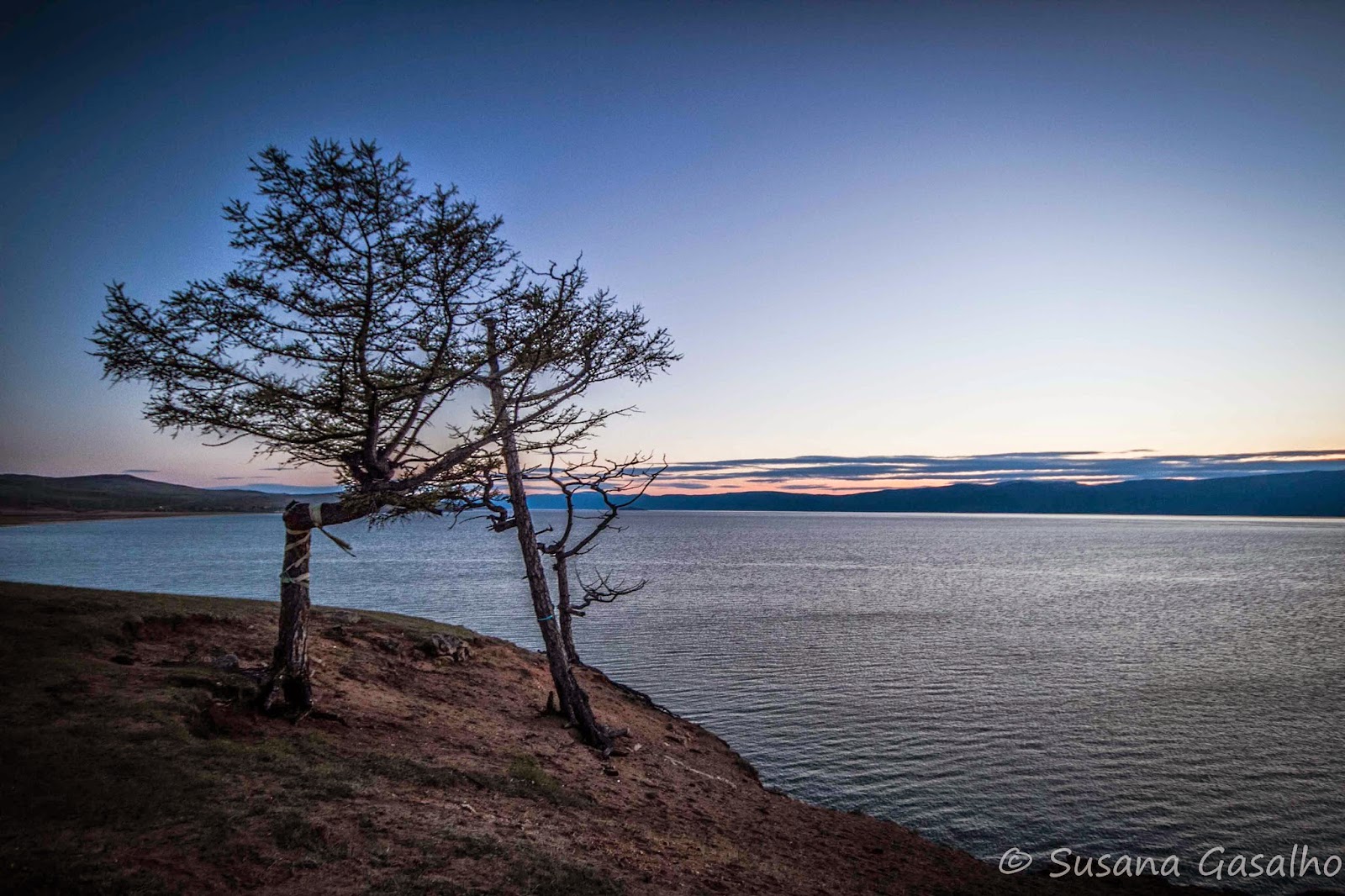
Lake Baikal from Olkhon in the evening
Shaman rock and a prayer's point
Lake Baikal 
Digging a hole for our couchsurfing host
Our home for a few days

Beach on the island
View to lake Baikal
Lake Baikal from Olkhon island
Pine trees 
Shaman rock
Olkhon é a maior das ilhas do lago Baikal com 71,5 Km de comprimento e 20,8 Km de largura. Os mongóis crêem que, segundo antigas lendas, ela é o centro do universo.
É grande o suficiente para ter os seus próprios lagos e é composta por suaves colinas (o ponto mais alto, Monte Zhima, tem 818m acima do nível das águas do lago), estepes e uma densa floresta na parte Nordeste da ilha.
Tem algumas longas praias de areia, mas noutros locais a terra acaba abruptamente no lago, o que lhe confere uma atmosfera selvagem e intacta, com belas paisagens sobre as águas límpidas.
O lago Baikal, localizado no sul da Siberia, tem 25 milhões de anos e é o maior lago de água doce do mundo. Contém aproximadamente 22% de todas as reservas de água doce (não gelada) do mundo e é o mais profundo lago do planeta (1640m). Está também entre os lagos com as águas mais límpidas, tendo uma flora e fauna muito ricas: mais de 3500 espécies das quais ¾ são endémicas. Foi declarado Património do Mundo pela UNESCO em 1996.
Está completamente rodeado por montanhas e alberga também os Buryat, uma tribo que reside no lado leste do lago de origem mongol (provavelmente descendetes do Genghis Khan).
No Inverno o lago gela e é possível caminhar sobre ele e fazerem-se desportos da estação assim como alugar trenós puxados por cães.
Nós ficámos 4 dias na ilha, em casa de um russo que, gentilmente, oferece um espaço para dormir e cozinhar em troca de alguns trabalhos, no nosso caso, ele precisava de gente para cavar um buraco para uma nova “casa-de-banho”.
No mesmo espaço estiveram connosco o Léo e a Julie, outro casal francês e um casal alemão que viaja pelo mundo. A cidade principal da ilha, Khuzir, tem 2 pequenos mercados com produtos obviamente caros por serem escassos e alguns hotéis. As estradas não são pavimentadas, só o hotel principal tem canalizações, de resto a água utilizada pelos locais é recolhida no lago, e as vacas deambulam livremente na sua busca por alimento.
Há alguns locais que organizam tours e actividades mas é dificil perceber o horário de funcionamento das coisas, e o hotel principal (Nikita’s) parece ter o monopólio das actividades da ilha.

//

Olkhon is the largest island of Baikal Lake with 71.5 km long and 20.8 km wide. Mongolians believe that, according to ancient legends, it is the center of the universe.
It's big enough to have its own lakes and consists of rolling hills (the highest point, Mount Zhima, is 818m above the lake’s water level), and a dense forest steppe in the Northeastern part of the island.
It has some long sandy beaches, but at some places the land ends abruptly at the lake, giving it a wild and unspoilt atmosphere, with wonderful views over the clear waters.
The Baikal Lake, located in southern Siberia, is 25 million years old and is the largest freshwater lake in the world. Contains approximately 22% of all freshwater bodies (not icy) in the world and is the deepest lake in the world (1640m). It is also among the lakes with most clear water, having a very rich flora and fauna: over 3500 species of which ¾ are endemic. It was declared UNESCO  World Heritage in 1996.
Is completely surrounded by mountains and also houses the Buryat, a tribe that lives on the east side of the lake, of Mongolian origin (probably descendetes of Genghis Khan).
In winter the lake freezes and you can walk on it and make season sports as well as rent dogsleds.
We stayed for four days on the island, in the home of a Russian who kindly offers a space to sleep and cook in exchange for some work. In our case he needed people to dig a hole for a new "toilet".
In the same space were with us, Leo and Julie, another French couple and a German couple who travel the world. The island's main town, Khuzir, has 2 small markets with obviously expensive products because they are scarce and some hotels. The roads are not paved, only the main hotel has plumbing, moreover the water used is by the locals is collected from the lake, and cows roam freely in their search for food.
There are some places that organize tours and activities but it is hard to understand the working hours of things, and the main hotel (Nikita's) seems to have a monopoly on island activities.